
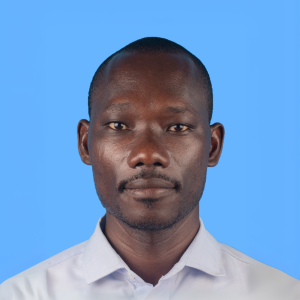
Nébon Bado
From
Joseph Ki-Zerbo University of Ouagadougou - BF
In residence at
Laboratory of Physics and Chemistry of Environment and Space (LPC2E) / CNRS, University of Orléans, CNES - FR
Host scientist
Gwenaël Berthet
Biography
Nébon BADO holds a PhD in applied physics, specializing in atmospheric and environmental physics. After defending his thesis in April 2019, he was recruited as a university assistant at Joseph KI-ZERBO University of Burkina Faso in 2020. Three years later, in July 2023, he was placed on the list of candidates eligible for the position of Assistant Professor by the African and Malagasy Council for Higher Education (CAMES) following an application, and was immediately appointed to the position of Assistant Professor at Joseph KI-ZERBO University by ministerial decree, where he worked as a teacher-researcher in physics. In addition to being a teacher, Mr. Nébon BADO is a member of the Renewable Thermal Energy Laboratory (LETRE) and conducts research on several aspects of air pollution, including the optical, microphysics, and radiation characterization of aerosols through a research team called Atmospheric Physics-Radiation-Climate. For his research, he uses techniques based on satellite-borne sensors and in situ measurements using optical instrumentation combined with chemistry-climate simulations to study air quality and the climate impact of aerosols.
Project
Microphysical and optical characterization of aerosols in urban areas by in situ and balloon flight measurements: application to the study of air quality in Burkina Faso, West Africa
The research project is a microphysical and optical characterization of aerosols based on new techniques developed at the LPC2E/CNRS in Orléans, with the aim of studying air quality and assessing the health and climatic impact of aerosols in Burkina Faso, located in the heart of West Africa. The LPC2E uses aerosol-counter optical instruments to measure the concentration of atmospheric particles on the ground and in flight using a meteorological balloon. These are the LOAC (Light Optical Aerosol Counter) instrument, which measures in at least 19 particle size ranges between 0.15 µm and 50 µm, and the POPS (Portable Optical Particle Spectrometer), which measures the concentration of liquid aerosols between 0.14 µm and 3 µm in meteorological balloons. One of the innovative qualities of the LOAC instrument is its ability to provide a typology of the particles present. In addition, LPC2E has a global chemistry-climate model CESM2 used to characterize the sources and climatic impact of aerosols, particularly for the West African zone, and especially for Burkina Faso, with a simulation already available for the period 2000-2020. All these techniques, tried and tested at LPC2E/CNRS in Orléans and particularly lacking in Burkina Faso, will constitute a first in this region of Africa, with a strategy that is intended to be multi-year via a long-term inter-institute collaboration. This research project will make an enormous contribution to the training of students, particularly in Burkina Faso, and the promotion of scientific skills in air quality characterization and the assessment of the health and climatic impact of aerosols.
Publications
Final reports
The work presented is a report on a research stay as part of LE STUDIUM for visiting researchers from September 1 to November 30, 2025, at the Laboratory of Physics and Chemistry of the Environment and Space (LPC2E) of the CNRS in Orléans. This is a research stay whose objective is to apply an in-depth methodology for the microphysical, optical, and radiative characterization of aerosols at the surface and at altitude. This technique is based on in situ measurements taken by the LOAC instrument during flights using weather balloons, climate model simulations, and data from airborne and satellite sensors. This enabled us to understand the measurement methodology using the LOAC instrument, which has already been tested by the CNRS's LPC2E, and aerosol modeling using ECSM2 model simulations. Based on the measurement campaigns carried out, we analyzed the aerosol profile as well as that of PM1, PM2.5, and PM10, and the volume size distribution of the particles. Also, based on aerosol extinction evaluated using the Mie code, we were able to determine the aerosol optical depth (AOD), which is an integration of the extinction coefficient across the atmospheric layer. In addition, this trip was an opportunity to participate in a validation study of the ATLID lidar aboard the EarthCare satellite, which has been in orbit since May 2024. This has enabled us to learn a new approach to the optical and microphysical characterization of aerosols that can be applied in Burkina Faso and West Africa in general.