
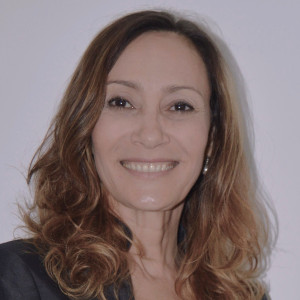
Maria de Lourdes Mendonça Santos Brefin
From
The Brazilian Agricultural Research Corporation (EMBRAPA) - BR
In residence at
Host scientist
Antonio Bispo
BIOGRAPHY
Dr. Maria de Lourdes Mendonça-Santos is a Senior Researcher at the Brazilian Agricultural Research Corporation (Embrapa), since March 1990. She is a distinguished expert in soil science and geomatics, her research focuses on the intersection of pedology and pedomtrics or quantitative quantitative pedology, soil-landscape modeling, and Digital Soil Mapping (DSM), applied to evaluate soil functions, services and threats.She holds a Bachelor’s degree in Agronomy from the State University of Maranhão (1986) and a Master’s degree in Agronomy (Soil Science) from the Federal Rural University of Rio de Janeiro (1990). She completed her advanced studies in Switzerland at the École Polytechnique Fédérale de Lausanne (EPFL), earning a Master’s degree in Environmental Sciences (1995) and a Ph.D. in Science (Pedology and Geomatics) in 1999. She further conducted post-doctoral research at The University of Sydney, Australia (2004), focusing on Digital Soil Mapping of soil Properties and classes.
Throughout her tenure at Embrapa, Dr. Mendonça-Santos has demonstrated extensive institutional leadership and research management. At Embrapa Soils, she led numerous national and international research projects and initiatives and served in key executive roles, including three terms as Director-General (Chefe Geral) of Embrapa Soils: twice consecutively from 2009 to 2014, and subsequently from June 2021 to March 2024. Additionally, she served as the International Liaison Coordinator for Embrapa Soils until 2016 and held the post of Director-General of Embrapa Maranhao State, from September 2016 to May 2021. She created and coordinated the biggest Brazilian Project in Soil Survey and Governance, the PronaSolos.
Dr. Mendonça-Santos possesses a prominent profile in the international scientific community. She served two consecutive terms (2013–2018) as an expert member of the Intergovernmental Technical Panel on Soils (ITPS) within the scope of the Global Soil Partnership (GSP) from FAO - Food and Agriculture Organization of the United Nations, representing Brazil and Latin America and Carebeean. In this capacity, she contributed to the Action Plans for the GSP’s Five Pillars, the Revised World Soil Charter, and served on the Editorial Board of the benchmark FAO publication, Status of the World's Soil Resources Report (SWSRR), released during the 2015 International Year of Soils.
Her international leadership also includes serving as the head of the Latin American hub for the GlobalDigitalSoilMap.net consortium and steering the FAO-EMBRAPA international cooperation project aimed at establishing the Soil Information System for Latin America and building DSM technical capacity across LAC countries. Nationally, she spearheaded the creation of the Brazilian Digital Soil Mapping Network.
A prolific author and highly cited scholar, her key publications include the seminal 2003 Geoderma article "On Digital Soil Mapping" with more than 3.100 citations in Scopus database, and reached the 5.300 citations in Google Scholar, consolidating as the main theoretical mark to the soil Science and Pedometrics Community. The Springer book entitled "Digital Soil Mapping with Limited Data" published in 2008, has recorded over 52,000 chapter downloads.
She regularly supervises graduate and undergraduate researchers, serves on thesis defense committees, and acts as a guest lecturer at top universities. She is an active member and editorial board contributor for the Brazilian Society of Soil Science, a member of the International Union of Soil Sciences (IUSS), and serves as an ad-hoc reviewer and consultant for numerous international scientific journals and funding agencies.
PROJECT
Development and mapping of Soil Safety / Soil Health Indicators for Sustainable Agroecosystems in Brazil and France
This research proposal addresses the critical degradation of global soil resources, highlighting that over 60% of European and 50% of Latin American soils are currently considered unhealthy. The project aims to perform a literature review and discussion on the concepts of soil health and soil security, and subsequently, to map and compare them in pilots areas in Brazil and France, encompassing different situations of pedoclimatic contexts : temperate and tropical conditions. While soil Health focuses on the functional performance of soil relative to its potential, soil Security offers a multidimensional systemic framework structured around five dimensions, known as the "5 Cs": Capacity, Condition, Capital, Connectivity, and Codification.
The methodological approach is structured in three steps:
1. Conceptual Framework: A literature review to discuss both concepts, and define measurable metrics for the "5 Cs," focusing on translating socio-economic dimensions (e.g., Capital) into spatial indicators, if possible;
2. Study Area Selection: Identification pilot-areas in the Centre-Val de Loire region (France) and Brazil, with large legacy data availability in both countries;
3. Modelling and Mapping: Application of Digital Soil Mapping (DSM) using the SCORPAN model and Machine Learning (ML) algorithms. This approach will integrate multi-source environmental covariates to predict soil attributes and spatialise soil security and soil health indices.
The project is innovative in its use of different approaches of ML and Artificial Intelligence to quantify and map the multidimensional aspects of soil security at a regional scale, a task not yet undertaken in these countries. Expected outcomes include the production of the first soil security maps for the selected regions, the development of predictive models linking sustainable agricultural practices to improved soil security, and contributions to public policies such as the EU Soil Monitoring Law and Embrapa’s One Health initiative. The initiative fosters strategic international cooperation between Embrapa, INRAE, USP/ESALQ, and the University of Sydney.