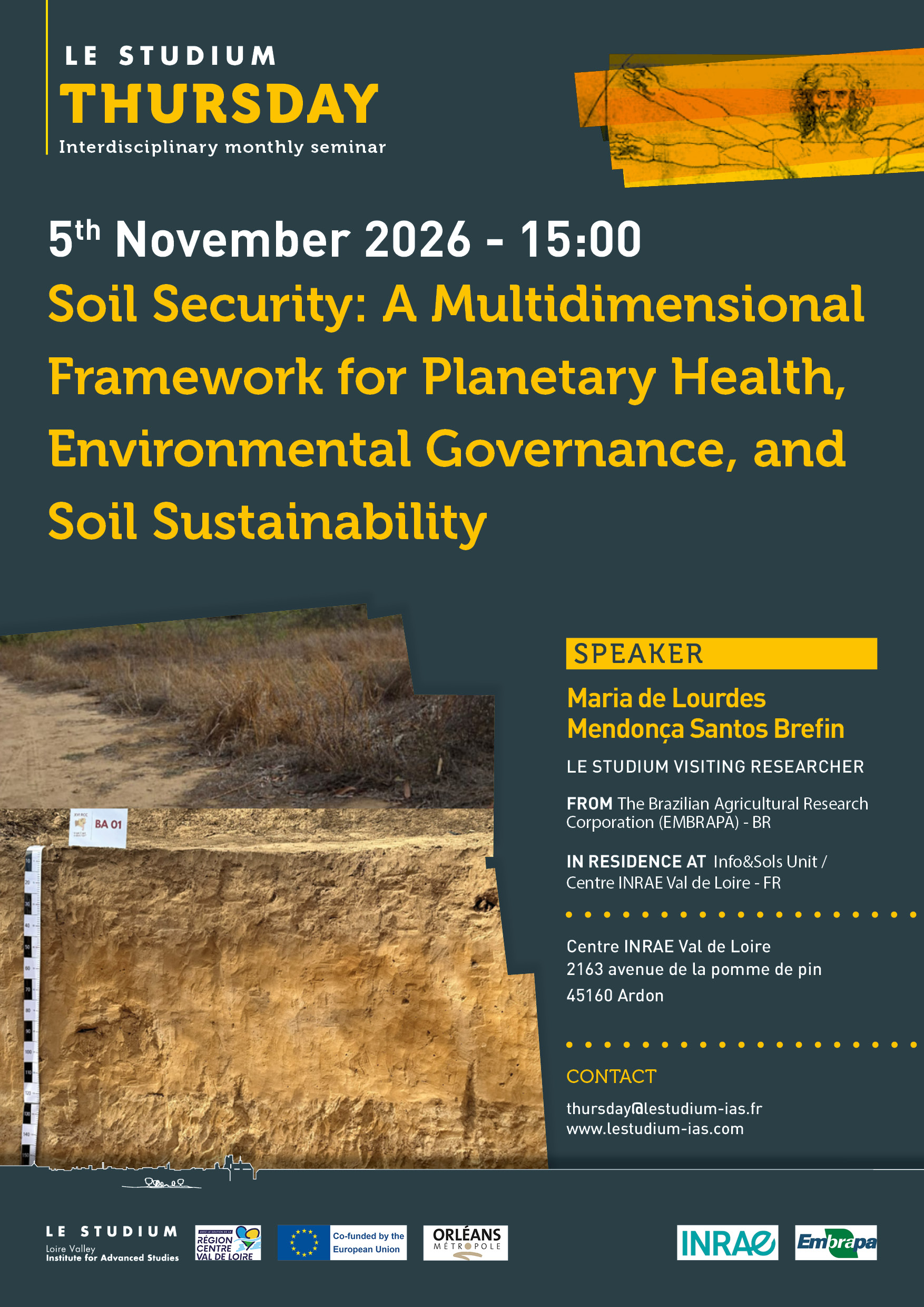
Soil Security represents the maintenance and improvement of the global soil resource to sustain planetary health, food production, freshwater filtering, and carbon sequestration. As a dynamic, living membrane connecting the atmosphere, hydrosphere, and biosphere, soil performs essential ecosystem functions that regulate global biogeochemical cycles and the life in Earth. However, unsustainable land use, as intensive agricultural practices, deforestation, and urban expansion accelerate soil erosion and the depletion of soil organic carbon, converting critical terrestrial carbon sinks into net greenhouse gas sources and threatening global socioeconomic stability.
The evolution of the soil evaluation approaches and the rapid development of Digital Soil Mapping (DSM), Machine Learning (ML) and other technologies, now enables researchers to quantify and predict soil properties, functions, services and vulnerabilities at unprecedented spatial and temporal resolutions. Despite these technological advances, major challenges persist in translating complex, multidimensional pedological data into standardized, actionable indicators that can guide sustainable management and inform public policy.
In this presentation, I will illustrate three key pillars of the Soil Security paradigm, ranging from fundamental pedological modelling to applied global governance:
- Differentiating inherent biophysical potential (Capacity / Genosoils) from dynamic, managed states (Condition / Phenosoils) mapped through spatial Pedogenons (a spatial domain with a unique combination of inherent, long-term soil-forming factors like parent climate, organisms, topography, and parent material, over time), thereby resolving the problem of baseline missing and disagreement indexes in in current Soil Health scoring;
- Operationalizing the Soil Security Assessment Framework (SSAF): Applying a quantitative multi-criteria matrix evaluating soil roles (functions, ecosystem services, and threats) across the five dimensions—Capacity, Condition, Capital, Connectivity, and Codification in a comparative study between tropical and temperate soils in Brazil and France;
- Advancing Regional and International Governance: Translating pedological data into enforceable policy through territorial Soil Districts (under the EU Soil Monitoring Law) and building the scientific rationale for a binding United Nations Global Convention to Secure Soil as humanity’s 8th Global Existential Challenge.
Together, these examples highlight how elevating soil science into a multidimensional security framework provides a unified roadmap to protect biodiversity, abate climate change, safeguard human health (One Health), and secure planetary sustainability for the 21st century.
Speaker
Maria de Lourdes Mendonça Santos Brefin
LE STUDIUM Visiting Researcher
FROM: The Brazilian Agricultural Research Corporation (EMBRAPA) - BR
IN RESIDENCE AT: Info&Sols / INRAE - FR