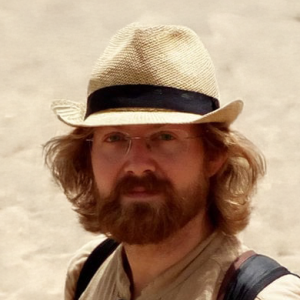
Giuseppe Labisi
From
In residence at
Maison des Sciences sociales et des Humanités Val de Loire (MSH VdL) / CNRS, University of Tours, University of Orléans - FR
Host scientist
Anna Caiozzo
BIOGRAPHY
Giuseppe Labisi is an archaeologist specialising in the archaeology of architecture and landscape with research interests spanning the pre-Islamic and Islamic periods across the Mediterranean and Western Asia. He obtained his PhD in Islamic Archaeology through a cotutelle programme between Sapienza University of Rome and Université Paris 1 Panthéon-Sorbonne.
He is currently a postdoctoral researcher at the University of Konstanz and an associate member of the POLEN research centre (UR 4710) at the University of Orléans. His work focuses on the archaeological study of buildings, construction techniques, and stratigraphic analysis of elevations, integrated with the investigation of settlement systems, gardens, and cultural landscapes. Particular attention is devoted to the relationship between architecture, power, and the management of space from the Sasanian period to the medieval Islamic world.
Giuseppe Labisi has coordinated and participated in several international research projects in Iran and Italy and is co-director of the archaeological project “History and Archaeology of Mount Altesina” (Sicily). He is the author of a monograph on Umayyad residential architecture and numerous peer-reviewed publications addressing architectural models, landscapes, and settlement dynamics in Late Antique and Medieval contexts.
PROJECT
Patronage, politics and traditions. The challenges of Islamic architecture in the Muslim West between gardens, palaces and the archaeology of buildings
The research project "Patronage, politics and traditions. The challenges of Islamic architecture in the Muslim West between gardens, palaces and the archaeology of buildings" investigates medieval architectures and landscapes in the Greater Maghreb between the 9th and 12th centuries through the methodological framework of the archaeology of architecture. By focusing on architectural studies, the research aims to improve the understanding of settlement models and spatial organisation, addressing long-standing gaps in the study of Medieval architecture in the western Mediterranean.
A central component of the project is the analysis of palatial and garden architecture, with particular attention to pavilions and audience spaces such as the iwan. These architectural elements are examined within a broader comparative perspective that traces the transmission of models from the Sasanian and early Islamic Western Asia to the western Mediterranean. Recent archaeological evidence from Iran, Iraq, North Africa, and Southern Italy (Sicily) provides the basis for identifying shared planimetric and functional patterns especially those related to aristocratic residences and managed landscapes.
The project also integrates perspectives from the environmental humanities by analysing gardens as both architectural structures and ecological systems. By combining architectural archaeology with environmental and cultural analysis, the project contributes to a deeper understanding of cultural transmission, landscape construction, and power relations in the medieval Islamic world.
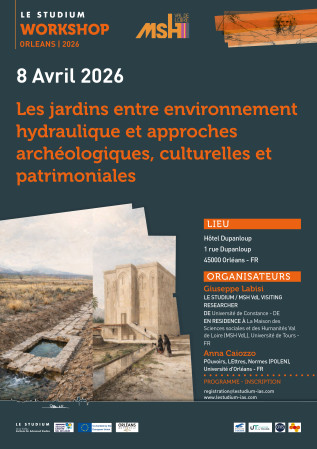
Events organised by this fellow