Fourth conference on the Metal-enabled Cycle of Renewable Energy (MeCRE)

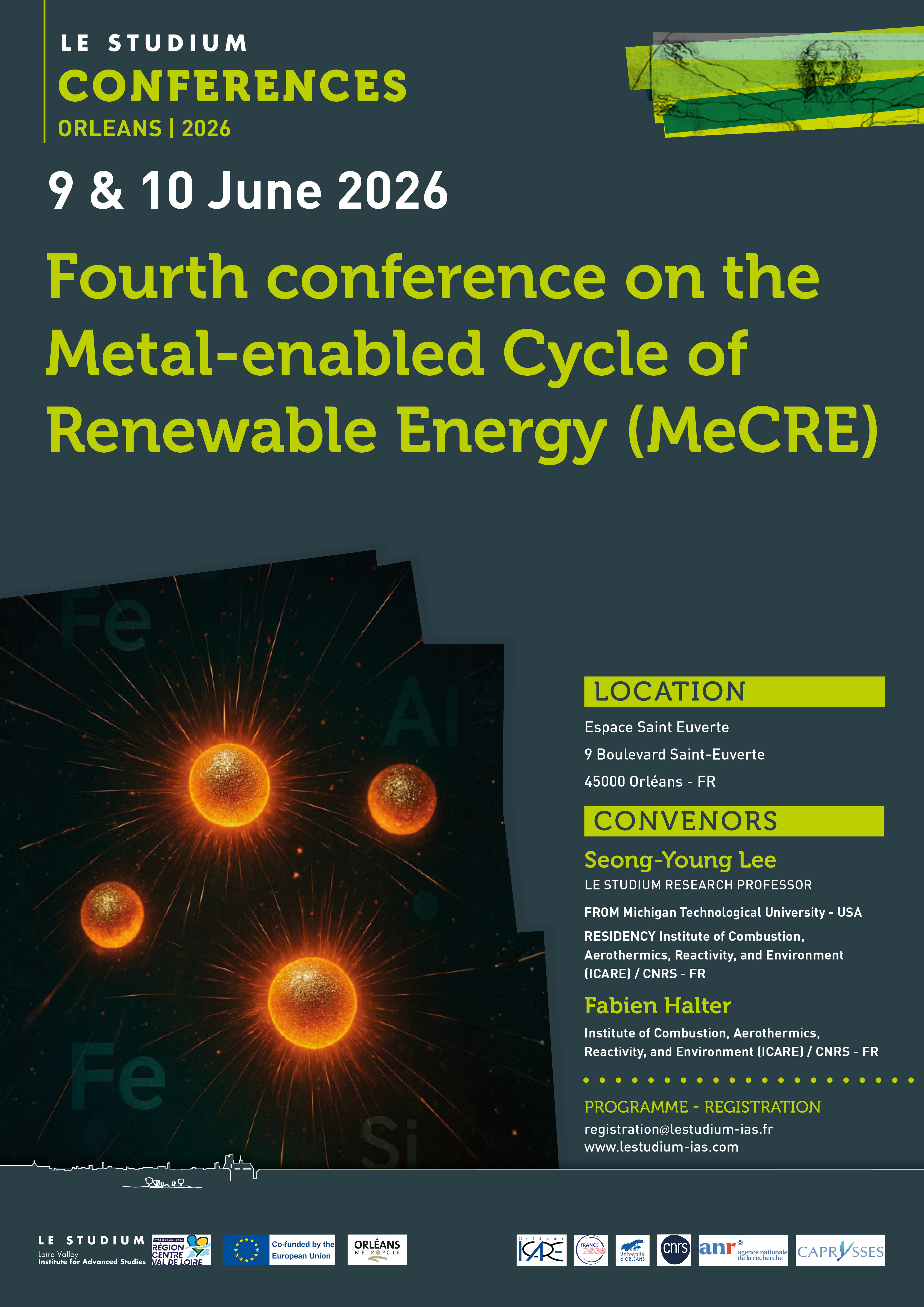
June 09, 2026 - June 10, 2026
Conference

Espace Saint Euverte
9, boulevard Saint Euverte
45000 Orléans
France

Presentation

The 4th Conference on the Metal-enabled Cycle of Renewable Energy (MeCRE) brings together researchers, industry leaders, and policy makers to explore the emerging concept of metal fuels as a sustainable energy carrier. As the world seeks alternatives to fossil fuels, metal powders such as iron and aluminum offer promising potential thanks to their high energy density, recyclability, and compatibility with existing energy systems.

This event provides a dedicated platform to examine the scientific, technological, and industrial advances required to establish a viable metal-fuel cycle.

Key goals include:

  • Knowledge Exchange - Showcasing the latest research on combustion, redox processes, and reactor technologies for metal-based energy systems.
  • Innovation and Applications - Highlighting real-world demonstrations and industrial use cases, from renewable energy storage to clean power generation.
  • Sustainability and Policy - Discussing environmental impacts, circular-economy benefits, and regulatory frameworks needed to ensure the safe and efficient development of metal fuels.
  • Collaboration and Networking - Fostering dialogue among academia, industry, and public authorities to accelerate innovation and investment.

By connecting diverse perspectives, MeCRE aims to position metal fuels as a credible pillar of the global energy transition and to inspire collective action toward a carbon-neutral future


Convenors

Seong-Young Lee, LE STUDIUM Research Professor

FROM Michigan Technological University - USA
IN RESIDENCE AT Institute of Combustion, Aerothermics, Reactivity and Environment (ICARE) / CNRS - FR  

Fabien Halter 
Institute of Combustion, Aerothermics, Reactivity and Environment (ICARE) / CNRS - FR

Confirmed speakers

Click on the name to display the abstract

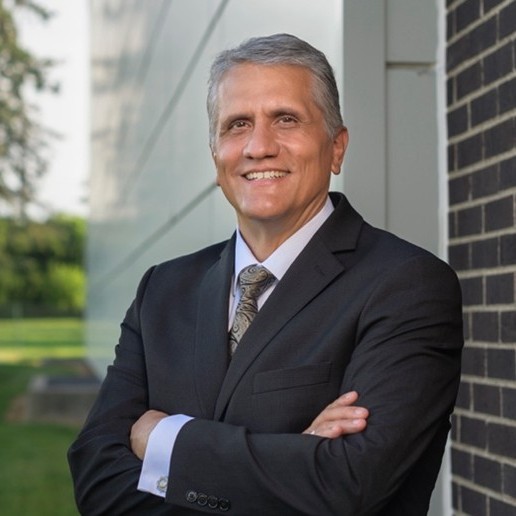
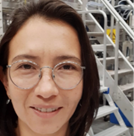
  • Carolina Guío-Pérez, Chalmers University of Technology - SE
    Carolina Guío-Pérez

    Chalmers University of Technology 

    Address:  Hörsalsvägen 7, 41296 Göteborg - Sweden

     Email: carolina.guioperez@chalmers.se

    Carolina graduated as chemical engineer from the Universidad Nacional de Colombia. After completing her PhD at the Vienna Technical University, she continued her research at BOKU university and Universidad Nacional de Colombia. She is now co-leader of the Fluidization research group at Chalmers University of Technology. She focuses on experimental research and development of measurement techniques.

    Reduction of iron oxide in fluidized bed systems 

    Reduction of iron oxides offers a versatile platform for metal-based diversification of energy carriers including large-scale long-term storage of renewable energy storage. Compared with established reduction in shaft reactors, fluidized beds provide superior mixing, higher gas-solid contact, faster reaction rates and, most importantly, flexibility on the feedstock’s distributions of size and chemical composition. This allows direct use of fine ores without major pretreatment, lowering the overall energy use and CAPEX of iron reduction. However, distinctive challenges are present: majorly sticking and defluidization, but also attrition and consequent need for fines handling. Industrial experience demonstrates that multi-stage reactor concepts offer higher control over the reaction rates and conditions, solving those issues to a large extent.
    This keynote will trace the evolution from early commercial fluidized-bed direct reduction technologies to today’s hydrogen-based iron cycles and iron-fuel concepts, highlighting both lessons learned and the remaining bottlenecks. Particularly, the lecture will discuss key current research questions for fluidized-bed reduction of iron oxides in the framework of redox cycles for renewable energy storage, i.e.: understanding sticking and sintering, understanding the evolution of material properties over redox cycles, and indicating economically viable operation modes. 
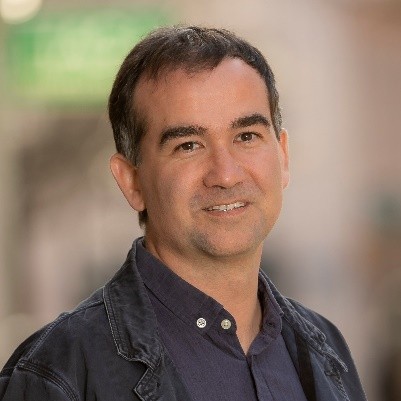
  • David Pallarès, Chalmers University of Technology - SE
    David Pallarès

    Chalmers University of Technology 

    Address:  Hörsalsvägen 7, 41296 Göteborg - Sweden

     Email: david.pallares@chalmers.se

    David Pallarès is professor in Industrial Energy Conversion with a background focused on fluidized bed technology. His experience covers a wide area of fluidized bed applications and combines modeling and experimental work. He co-leads the Fluidization research group at Chalmers and is Sweden’s representative in the Technology Collaboration Programme for Fluidized Bed Conversion of the International Energy Agency.

    Reduction of iron oxide in fluidized bed systems 

    Reduction of iron oxides offers a versatile platform for metal-based diversification of energy carriers including large-scale long-term storage of renewable energy storage. Compared with established reduction in shaft reactors, fluidized beds provide superior mixing, higher gas-solid contact, faster reaction rates and, most importantly, flexibility on the feedstock’s distributions of size and chemical composition. This allows direct use of fine ores without major pretreatment, lowering the overall energy use and CAPEX of iron reduction. However, distinctive challenges are present: majorly sticking and defluidization, but also attrition and consequent need for fines handling. Industrial experience demonstrates that multi-stage reactor concepts offer higher control over the reaction rates and conditions, solving those issues to a large extent.
    This keynote will trace the evolution from early commercial fluidized-bed direct reduction technologies to today’s hydrogen-based iron cycles and iron-fuel concepts, highlighting both lessons learned and the remaining bottlenecks. Particularly, the lecture will discuss key current research questions for fluidized-bed reduction of iron oxides in the framework of redox cycles for renewable energy storage, i.e.: understanding sticking and sintering, understanding the evolution of material properties over redox cycles, and indicating economically viable operation modes. 
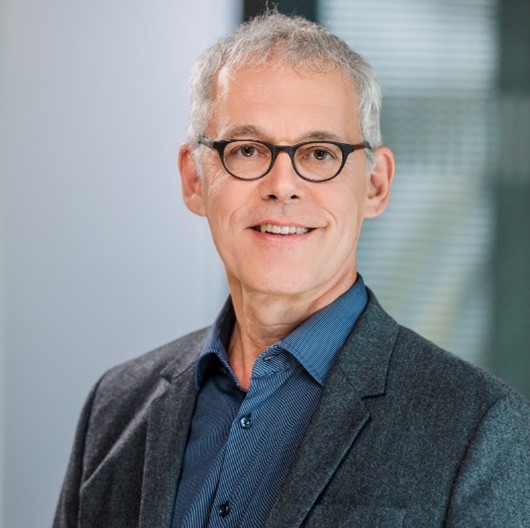
  • Christof Schulz, Institute for Energy and Materials Processes, University of Duisburg-Essen - DE
    Christof Schulz

    Institute for Energy and Materials Processes, University of Duisburg-Essen

    Address:  Carl-Benz-Str. 199, 47057 Duisburg - Germany

     Email: christof.schulz@uni-due.de

    Christof Schulz studied Chemistry at the University of Karlsruhe. He received his PhD at the University of Heidelberg in 1997 with a thesis on laser-spectroscopic measurements of nitric oxide in internal combustion engines. He headed a junior group in Heidelberg where he also received his Habilitation in 2002. During this time, he spent several research periods at Stanford University, first as Visiting Scholar and from 2002–04 as Consulting Associate Professor. In 2004 he assumed the Chair for Reactive Fluids at the Institute for Energy and Materials Processes the University of Duisburg-Essen. Since 2009 he is the founding director of the NanoEnergyTechnologyCenter (NETZ) and since 2024 the director of the Research Center Future Energy Materials and Systems.

    High-temperature gas-phase synthesis of functional nanomaterials   

    Nanoparticle formation in flames enables the generation of high-purity materials with well-controlled properties but also describes unwanted phenomena related to metal combustion. Increasing process understanding and control provides a chance for scale-up of highly specialized lab-scale technologies used for the manufacturing of unique materials to industrial scale. For the synthesis of materials with desired properties, the reaction conditions must be well controlled and the underlying processes understood. The decomposition kinetics of precursor compounds, as well as the reaction mechanisms of decomposition, cluster formation and particle nucleation, and the potential interaction with bath gases and flame chemistry is a prerequisite for a targeted synthesis. Kinetics experiments are carried out in shock-tube reactors with optical and mass spectrometric detection of intermediate and product species. Flow reactors equipped with laser-based detection of temperature and species concentration as well as molecular-beam sampling techniques allow for detailed investigation of the particle formation processes. Reaction conditions such as temperature, intermediate species concentration and particle size must be determined in situ in lab-scale nanoparticle reactors and the definition of standardized experiments that allow to build-up large data bases for model development is important. The scale-up to pilot-plant-scale based on simulation and experiments finally helps to prove the viability of new technologies and their application on mass markets such as materials for batteries or electrocatalysis.

  • Keena Trowell, McMaster University - CA
    Keena Trowell

    McMaster University 

    Address:  John Hodgins Engineering Rm 310 1280 Main St. W, Hamilton, ON  L8S 4L7 - Canada

     Email: trowellk@mcmaster.ca

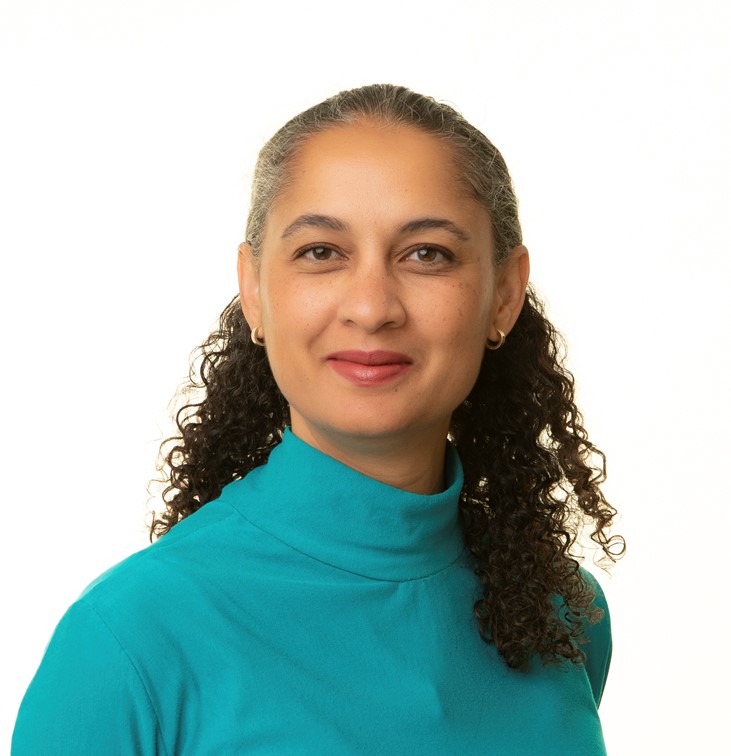
    Keena Trowell is an Assistant Professor in the Department of Mechanical Engineering at McMaster University (Hamilton, Canada). She earned her PhD at McGill University (Montréal, Canada). Her expertise is in high–temperature, high–pressure metal–water reactions for heat and hydrogen production. She also investigates the use of supercritical water as an oxidizer in metal–water systems. Dr. Trowell’s research interests include metal fuels, energy storage, energy for remote regions, the water–energy nexus, and the techno–economic analysis of circular fuels. She has several publications on these topics and holds a patent based on her research.

    The aluminium energy cycle: an overview of production, conversion, power generation, and life cycle impacts of aluminium as an energy carrier    

    Although aluminium has historically been used largely as a structural material, its intrinsic characteristics make it a promising large–scale energy vector. Aluminium has high volumetric and gravimetric energy densities, is reactive under the right conditions, is safe to handle and transport, and there is a clear pathway to zero–carbon production. An overview of the aluminium energy cycle is presented: aluminium production, aluminium–water reactions, power generation from reaction products, and eco-technoeconomic and lifecycle analysis.
    The key aspects of aluminium smelting and implications for grid management, long–duration energy storage, inert anode technology, and transportation are reviewed. The fundamentals of aluminium-water reactions are presented, with a focus on the influence of morphology and reactor conditions on hydrogen production rates and yields. The power generation pathways enabled by these reactions are also reviewed. They include electrochemical conversion in fuel cells, thermal power generation, and proposed novel cycles. The system-level efficiencies, integration challenges and operational constraints are considered. Finally, published eco-technoeconomic analysis (eTEA) and lifecycle assessments (LCA) are synthesized to identify the economic and environmental performance of aluminium as an energy carrier. The talk highlights key technical challenges and outlines opportunities for aluminium to serve as a recyclable and scalable low-carbon energy carrier.

Oral presentations & posters

Abstracts should be submitted before Monday 2nd March 2026.

Please upload your abstract during the registration or send it before the deadline to maurine.villiers@lestudium-ias.fr.

The number of oral presentations is limited, convenors will process a selection and confirm your presentation few days later.

Please note that we do not print the posters, but racks & pins will be provided for up to A0 sizes, portrait format.

Location

Espace Saint-Euverte


Espace Saint Euverte - 9 Boulevard Saint Euverte 45 000 Orléans - FR

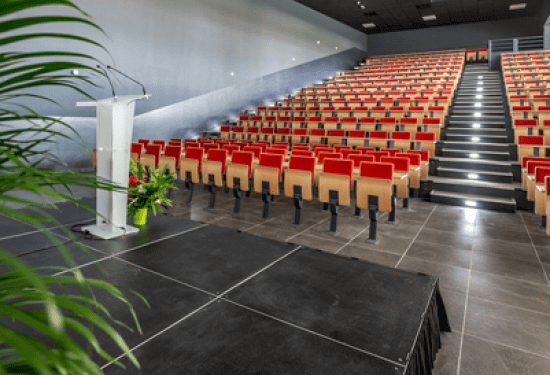
Espace Saint-Euverte is a cultural and conference venue located in the historic centre of Orléans, close to Orléans Cathedral. The site is housed in a former religious building that has been carefully renovated to host cultural, academic, and professional events.

Today, Espace Saint-Euverte offers modern facilities adapted to conferences, seminars, and public events, while preserving the distinctive character of the original architecture. Its combination of historical features and contemporary equipment provides a welcoming and functional setting for scientific and academic exchanges.

Thanks to its central location, the venue is easily accessible and allows participants to enjoy the cultural heritage of Orléans, as well as the city’s gastronomy and surroundings during their stay.

General Information

Information
Congress Venue

 Espace Saint Euverte, 9 boulevard Saint Euverte

45000 Orléans, France

Dates
 Dates

Tuesday, 9 June  - Wednesday, 10 June 2026

Language
 Language

The official language of the Congress is English

Badge
Welcome pack and Name Badge

 Upon arrival you will receive a welcome pack that includes the printed material of the Conference and your name badge will be given to you at the reception . Please wear your name badge at all times during the Conference and to all official Conference events.

Invitation Letters
Invitation Letters

 An official letter of invitation facilitating the obtention of an entry visa can be sent upon request . In order to receive an invitation letter for visa purposes, send an email to maurine.villiers@lestudium-ias.fr. Please note that : 
- we only issue an official letter once the payment of the registration fee has been validated.
- such letters do not represent a commitment on the part of the Organisers to provide any financial assistance.

Certificat
Certificate of attendance

 After the conference, in order to receive a certficate of participation, send an email to maurine.villiers@lestudium-ias.fr

Hotel
Hotels

List of recommended Hotels in Orléans

Restaurant
Restaurant

List of recommended Restaurants in Orléans

How to get there ?

Train
By train: 

* Orléans centre station
 1.5 hour trip from Paris (Austerlitz)

 * Les Aubrais station (4km from Orleans town centre)
Tramway A, 10 minutes trip to Orléans centre station

> Plan your trip by train: https://www.sncf-connect.com/en-en/

Voiture
By car:

GPS: 47.90239648948833, 1.9185189531534685
Paid car parks nearby : 
Parking Théatre / Centre de Conférence, Boulevard Aristide Briand, 45000 Orléans
Parking Saint Euverte, 10 boulevard Aristide Briand, 45000 Orléans


Avion
 By plane:

*Arrival at Roissy Charles De Gaulle (CDG) airport
Take RER B in direction to Saint Rémy Les Chevreuse, step out at Gare du Nord Stop
Take Metro 5 in direction to Place d'Italie, step out at Gare d'Austerlitz Stop 

> Then take a train to Orléans (see "by train" section above)

*Arrival at Paris-Orly (ORY) airport: 
Take RER C from Pont de Rungis – Aéroport d’Orly in direction to Pontoise.
Step out at Gare d'Austerlitz Stop

> Then take a train to Orléans (see "by train" section above)  

Pricing

Private institutions 460 EUR
Public institutions 290 EUR
Students & PhD Scholars 250 EUR


(Including two lunches, a dinner on the first evening, a guided visit , the gala dinner on the second evening and the coffee breaks)

Cancellation Policy
All cancellations must be made in writing and sent by email to the Registration Department
Up to 30 days prior to conference start – Full refund less €50 handling fee
Less than 30 days prior to conference start – No refund

Partners of the event

Click to enlarge image

Participate in this event