Irene Mendoza Sagrera

From
In residence at
Forest Ecosystems Research Unit (EFNO) / INRAE - FR
Host scientist
Kevin Darras
BIOGRAPHY
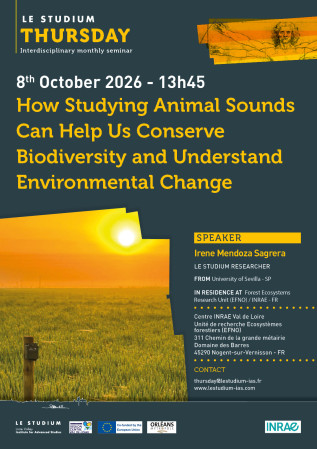
Irene Mendoza is an ecologist and senior postdoctoral researcher at the Department of Plant Biology and Ecology, University of Seville, Spain, where she has been working since 2024. Her research focuses on how ecological processes respond to global change, with particular emphasis on phenology, ecological interactions, biodiversity conservation and ecosystem services. More recently, she has developed a research line combining new technologies, including passive acoustic monitoring and machine learning, to improve biodiversity monitoring and conservation.
Her international research experience includes nine years of postdoctoral research in France, Brazil and Syria, as well as shorter research stays in Panama, the UK and Germany. She has led five competitive research projects, including a Marie Skłodowska-Curie Individual Fellowship, securing more than €700,000 in research funding. She is currently Principal Investigator of RarAvis, a project funded by the Spanish National Parks Autonomous Agency (OAPN), which applies passive acoustic monitoring to the detection and conservation of rare and threatened bird species in Spanish National Parks.
During her time at EFNO in France, she will build on her experience in PAM applied to biodiversity monitoring and ecological interactions to address more fundamental questions in ecology, including species coexistence and the partitioning of acoustic space.
PROJECT
Validating the Acoustic Niche Hypothesis across Avian Communities: Patterns of soundscapes across large scales
Animals use acoustic signals for essential ecological functions such as mating, territorial defence, and foraging. In mixed communities, vocal organisms face strong pressure to transmit signals efficiently while minimizing interference from background noise and other species. The Acoustic Niche Hypothesis (ANH) proposes that coexisting species partition acoustic space in time and frequency to reduce signal overlap and competition. Although first formulated conceptually in 1987 by Bernie Krause without any mathematical formulation, the ANH remains controversial, with alternative hypotheses emphasizing evolutionary constraints and communication network structure. Empirical tests of the mechanisms shaping acoustic community organization have so far been largely limited to local or regional scales and focused on pair of species. A comprehensive assessment across broad spatial, temporal, and biodiversity gradients, particularly for avian communities, is still lacking. In this proposal we will apply novel analytical techniques extracted from complex systems to disentangle the mechanisms underlying patterns in acoustic bird communities, using for audio data collected in different global programs of passive acoustic monitoring (PAM).
This project will be developed during the research residency of Dr Irene Mendoza at INRAE Val de Loire (EFNO Research Unit), in close collaboration with Dr Kevin Darras. INRAE Val de Loire provides a unique research environment and the collaboration with Dr Darras will facilitate the preparation of common protocols for long-term PAM in natural ecosystems, and the validation of the ANH at large scales.
By analyzing PAM datasets sampled across contrasting habitats, gradients of species richness, and varying levels of human disturbance, the project will test competing hypotheses explaining soundscape variation and acoustic niche partitioning. The expected outcomes include major conceptual advances in ecoacoustics and community ecology, as well as the validation of passive acoustic monitoring as a robust and scalable tool for tracking ecosystem health.
Events organised by this fellow