
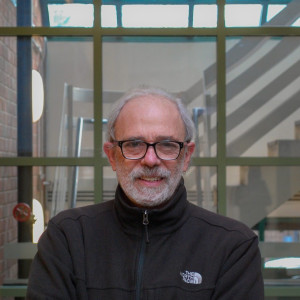
Alberto Saal
From
Brown University - US
In residence at
Earth sciences institute of Orleans (ISTO) - OSUC / CNRS, BRGM, University of Orléans - FR
Host scientist
Kenneth Koga
PROJECT
Tracing sulfur isotope during iron sulfide melt formation in Lunar basalts
Sulfur isotopes provide information on the conditions of planet formation, differentiation and evolution. The sulfur isotope composition of the Moon's interior is most directly reconstructed from the record preserved in the lunar magmatism. However, this reconstruction is compromised by magmatic processes that modify the initial compositions of the magmas. Only after those processes have been accounted for by detailed petrological and geochemical studies, the initial sulfur isotopes of the lunar magmas can be inferred, providing key information on the origin and early evolution of the Moon. In this proposal we want to address how sulfide saturation and segregation might have affected the sulfur isotopes of the lunar magmas. To understand the evolution of sulfur isotopes of a magma during sulfide saturation/segregation requires experimentally derived sulfur isotopes fractionation factors between silicate melt in equilibrium with sulfide melts. However, at present there is no work that provides the sulfur isotopes fractionation factors between silicate melt in equilibrium with sulfide melt within the range of compositions and magmatic conditions of pressure, temperature and oxygen fugacity represented by the lunar magmas. This is a glaring omission in the study of sulfur isotopes of the lunar magmatism and a first order barrier to establishing the sulfur isotope composition of the Moon's interior. We propose to do experimental and analytical work to determine the sulfur isotopes fractionation factors between silicate melt in equilibrium with sulfide melt in lunar magmas.
Events organised by this fellow
Publications
Final reports
The Moon is a cornerstone for understanding the early history (origin, budget and timing) of volatile elements (H, C, F, S, Cl) delivered to all terrestrial planets. The volatile study of lunar magmatism is the most direct way to reconstruct the volatile budget of the Moon’s interior. However, this reconstruction is compromised by magmatic processes that modify the initial compositions of the lunar magmas. The final goal of our work is to determine how sulfide saturation and segregation in all the compositional range of lunar lavas have affected the sulfur isotopic composition of the magmas. The determined sulfur isotopic fractionation between lunar silicate melts and immiscible sulfide blebs will allow us to directly unravel the sulfur isotopic composition of the heterogeneous reservoirs forming the Moon’s interior, and therefore, provide fundamental information on the early evolution of sulfur isotopes of the Earth’s satellite.