
July Andrea Galeano Zea
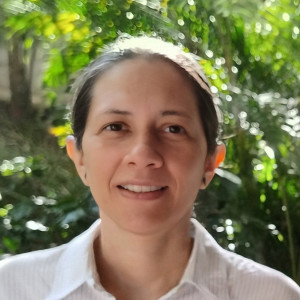
From
ITM University Institution, Medellín - CO
In residence at
Host scientist
Sylvie Treuillet
BIOGRAPHY
July Galeano holds a degree in Electronic Engineering from Universidad Pontificia Bolivariana (Medellín, Colombia) and a PhD in Engineering Sciences from the Université de Franche-Comté (Besançon, France). She completed postdoctoral research stays at the Le2i Laboratory (Laboratoire Électronique, Informatique et Image) at Université de Bourgogne, Dijon, France, and at the AS2M Laboratory (Automatique et Systèmes Micro-Mécatroniques) at Université de Franche-Comté, France. She is currently a Lecturer (Titular Professor, Level 1) in the Faculty of Engineering at Institución Universitaria ITM, Medellín, Colombia, where she conducts teaching and research activities. She is also a Visiting Researcher at the PRISME Laboratory at Université d’Orléans, France, as part of the Le Studium Program.
Since 2011, July Galeano has worked on the development of multispectral systems for the acquisition and processing of images of skin affected by various pathologies, with the aim of supporting clinical assessment. Her research focuses on light–tissue interaction models and AI-based algorithms for extracting optical parameters related to the biological processes involved in wound healing, particularly for the diagnosis and treatment monitoring of cutaneous leishmaniasis ulcers, a tropical parasitic disease.
July Galeano has led international collaborative projects with institutions in Colombia, Peru, and France. Since 2017, she has led projects focused on the development of portable, non-invasive multispectral imaging systems for the diagnosis and treatment monitoring of cutaneous diseases. Her work has been recognized through the “Medellín Investiga 2022” award for Research with the Greatest Impact, scientific publications, presentations at international conferences, supervision of undergraduate and graduate students, an industrial design registration, a software registration, and two patents for a spectral imaging device for cutaneous ulcers.
As part of her commitment to interdisciplinary knowledge transfer, July Galeano contributed to the development of a multispectral imaging system for the study of rock art in the Serranía de La Lindosa (Guaviare, Colombia), in collaboration with national institutions. Given the archaeological significance of this work, it was featured in the documentary “Chiribiquete: Un viaje a la memoria ancestral de América,” (“Les secrets des fresques d'Amazonie”) co-produced by ARTE France and Señal Colombia and broadcast internationally
PROJECT
Light-tissue interaction model for the assessment of skin aging in cosmetics using LC-OCT
Understanding skin aging is of both scientific and industrial interest due to its social, psychological, and medical implications. Negative perceptions associated with skin aging may lead to social isolation or discrimination. Moreover, biological processes such as cellular senescence and the decline of skin physiological functions are closely linked to the development of pathologies, including psoriasis and skin cancer. In this context, the development of new tools to better understand these biological mechanisms is essential to improve therapeutic strategies and skincare routines, thereby contributing to healthier skin and an improved quality of life.
Line-field confocal optical coherence tomography (LC-OCT) is a state-of-the-art imaging technique that enables in vivo access to the biological structures of skin layers with a resolution of approximately 1 micron. This project aims to develop a computational tool to estimate scattering coefficients based on a light–tissue interaction model, in order to extend current research on the optical properties of LC-OCT images of biological tissues.
Direct access to a large dataset of LC-OCT images of healthy skin, obtained from a multiethnic panel of women aged 20 to 70 years, will make it possible to develop a reliable light–tissue interaction model and to identify optical coefficients significantly associated with the degradation of skin biological structures, with potential applications in disease diagnosis and the evaluation of skincare products.