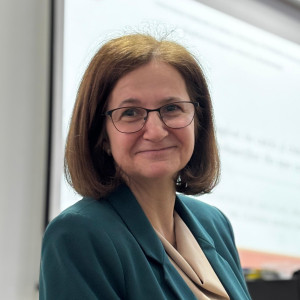
Claudia Maria Simonescu
From
National University of Science and Technology Politehnica Bucharest - RO
In residence at
Extreme Conditions and Materials: High Temperature and Irradiation (CEMHTI) / CNRS - FR
Host scientist
Lavinia Balan
Biography
Claudia-Maria SIMONESCU is a Professor at the Department of Analytical Chemistry and Environmental Engineering - Faculty of Chemical Engineering and Biotechnology – National University of Science and Technology POLITEHNICA Bucharest. In 2005, she obtained the title of Doctor in Chemistry and in 2025 she received the Habilitation Degree in Chemical Engineering. Her PhD was devoted to the using of unconventional strategies for obtaining transition metal sulfides. Her scientific contributions belong to the field of materials with environmental applications: magnetic materials and magnetic composites, silica-based materials, chitosan-based materials, chelating resins, zeolitic materials, hydroxiapatite-based materials for enhanced adsorption of heavy metals from wastewater, magnetic materials for dyes removal from single and binary aqueous solutions, the use of traditional and green methods to prepare materials for heavy metals removal from wastewater. She is author of over 85 research papers, published in ISI journals, 24 articles published in volumes of recognized international and national scientific events,10 books and 1 patent. She participated in different national and international research projects. She is an evaluator for research programs at international/national level and a member of editorial boards and scientific referent for scientific journals in the field.
Project
Magnetite-Based Materials for Efficient Dual Removal of Heavy Metals and Pharmaceuticals from Wastewater
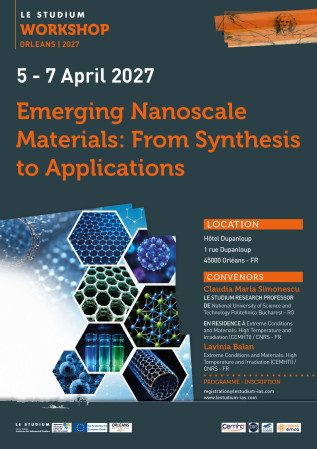
New porous core-shell magnetite-based adsorbents by functionalization of magnetite with chitosan and silica will be developed. Silica surface functionalization with amino groups and coating with metallic oxide semiconductors (TiO2 and Ag2O) will be performed to obtain composites with porous surface, high specific surface area and augmented active reaction sites. Green synthesis as microwave, ultrasounds-assisted, and photo-induced methods will be used for preparing core-shell materials to improve their adsorption and photocatalytic properties, and to reduce the environmental impact of the synthesis procedures. The new materials prepared will be used for remediation of heavy metals (Pb(II) and Cd(II)) and pharmaceuticals (tetracycline, amoxicillin, and diclofenac) from single, multiple and mixed-solutions through adsorption and photodegradation. Valuable insights regarding photocatalytic and adsorption properties, mechanisms involved, the photocatalytic degradation products, reusability and assessment of technological viability of processes from lab-scale to pilot scale will be provided. The long-term collaborations and exchange programs for PhD students with CEHMTI will be established.
Events organised by this fellow