Speakers
Thomas Biedermann, Australian National University - School of Cybernetics - AU
Thomas is a Senior Lecturer at the School of Cybernetics, at the Australian National University (ANU).
He integrates his background in systems engineering and interests in organisational design to research and deploy methods to create safe, sustainable, and responsible systems. His approaches draw on cybernetics, visual arts, and playcentric and embodied methods, to support diverse participants in imagining and acting towards hopeful futures.
He has applied these approaches in various contexts and at various scales, including a Sino-French joint research lab on haematology in Shanghai; the science diplomacy sections of French embassies in the USA and Australia; and the Australian Higher Education sector. Prior to his current role, he has served as inaugural manager of the 3AI Innovation Institute at ANU, and inaugural program manager for the ANU-wide decarbonisation program, Below Zero.
Thomas enjoys combining analysis and his systems engineering training with the creativity and joyfulness of visual arts and gameful design to support major societal transformations.
Thomas Fisher, Sustech School of Design - CN
Thomas Fischer is a Professor at the School of Design at Southern University of Science and Technology (SUSTech). He is a design educator and researcher with over 25 years of international experience and the leader of the SUSTech School of Design’s Design Cybernetics Group. Before joining SUSTech, he taught Interactive Systems Design as well as Industrial and Product Design at The Hong Kong Polytechnic University and Architecture as well as Industrial Design at Xi’an Jiaotong-Liverpool University. He was a visiting academic at National Cheng Kung University and Humboldt University. He holds a Ph.D. in Education from the University of Kassel and a Ph.D. in Architecture from RMIT University. He is a Fellow of the Design Research Society, a Fellow of the Cybernetics Society, a Certified Talent of the International Academy for Systems and Cybernetic Sciences, and a recipient of the American Society for Cybernetics’ Warren McCulloch Award..
Zhiqiang Gao, Cleveland State University - USA
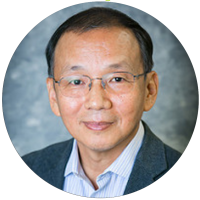
Prof. Zhiqiang Gao received his Ph.D. in Electrical Engineering from the University of Notre Dame in 1990 and has taught at Cleveland State University ever since. Faced with ever widening chasm between control theory and practice, Dr. Gao returned to the origins of controls, spanning East and West in space and centuries in time, and found great insights and inspirations. Collaborating extensively with NASA and industry in solving real world problems, Dr. Gao, together with his students and collaborators, aimed to rebuild the foundation and to restore the authenticity of control research. For nearly three decades, Dr. Gao nurtured active disturbance rejection control (ADRC) from its early, conceptual stage to a maturing and emerging industrial control technology, leading to a successful spinoff company and widespread adoption of ADRC technology by major players in industrial automation, often with staggering improvements in performance and energy saving. Asking basic, rudimentary questions in research and in teaching, Dr. Gao and his team find creative solutions in practice and vitality in education.
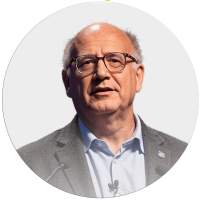
Michael Lissack, Tongji University College of Design and Innovation - USA
Dr Michael Lissack is a prominent scholar at the intersection of complexity science, systems thinking, and organizational management. Currently a Professor of Design and Innovation at Tongji University, he brings over 25 years of experience exploring how organizations navigate complexity through coherence, contextuality, and narrative. As former President of the American Society for Cybernetics (2014-2020) and Executive Director of the Institute for the Study of Coherence and Emergence (1998-2018), Dr. Lissack has championed interdisciplinary approaches to systems understanding. His influential work critiques reductionist management paradigms, advocating instead for context-sensitive, second-order perspectives that embrace ambiguity and emergence. Dr. Lissack's seminal publications include "Coherence in the Midst of Complexity" (2011), "Second-Order Science: Examining Hidden Presuppositions in the Practice of Science" (2016), and "The Next Common Sense: Mastering Corporate Complexity Through Coherence" (1999). His research demonstrates how narrative framing and metaphor shape organizational sense-making and decision-making in complex environments. A prolific organizer of academic discourse, Dr. Lissack has chaired over 20 international conferences on topics ranging from second-order science to the nature of experience. He holds a DBA from Henley Management College/Brunel University, an MBA from Yale, and serves on editorial boards including She Ji and Kybernetes. Dr. Lissack's unique blend of theoretical rigor and practical application offers valuable insights for system thinkers seeking to understand and navigate today's complex challenges.