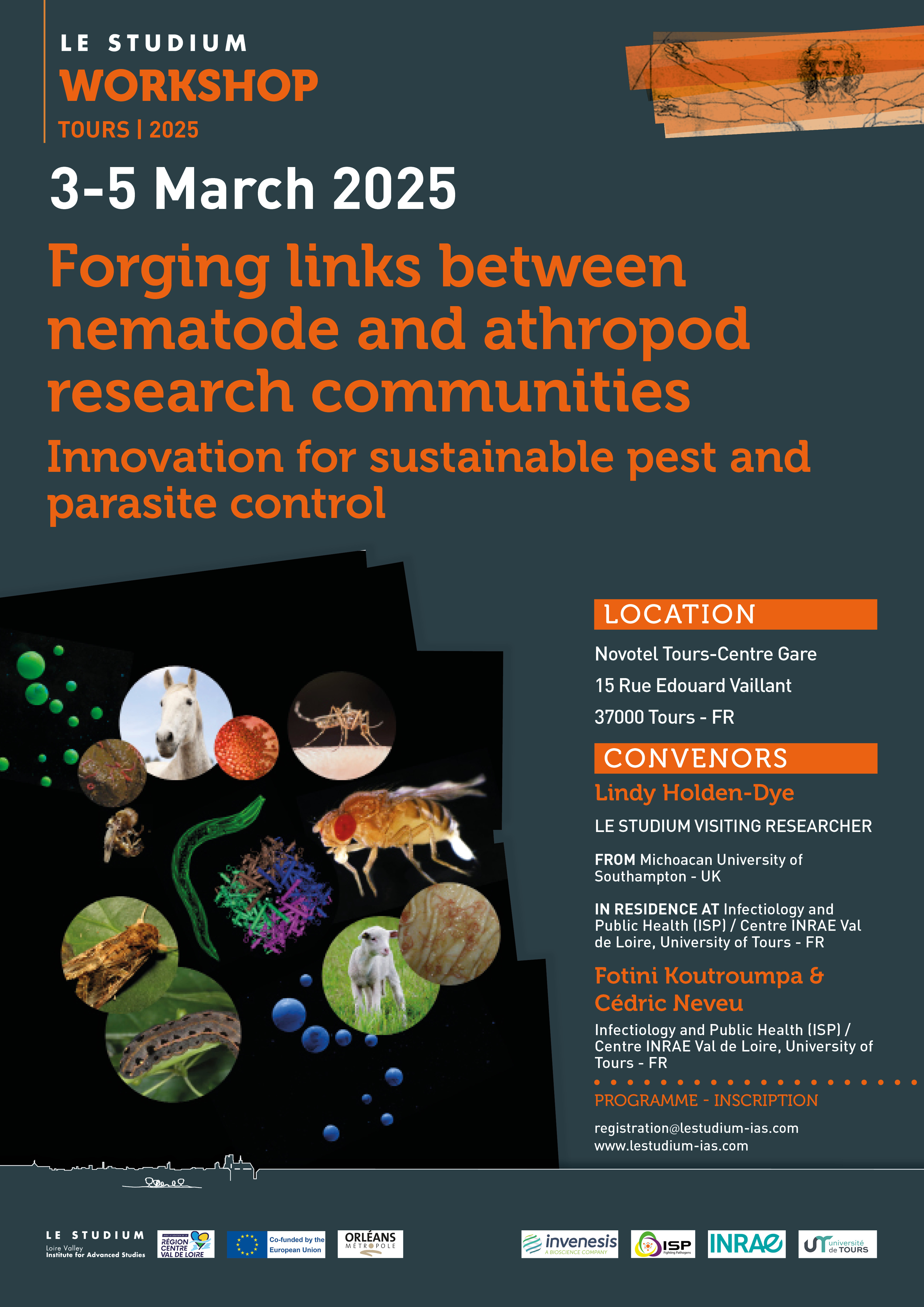
This two day workshop will focus on the role of ion channels as targets for pest and parasite control. Ion channels are found in the nerve and muscle cells of all animals and are nanoscopic transducers of signals that are vital for animal survival. This is true for invertebrate pests through to humans. Several chemicals have been used to block or modulate the function of ion channels and have proven to be excellent commercial products for controlling pests. However when the ion channels are evolutionary conserved the chemicals can have effects on non-target organisms which severely impacts their use in a sustainable fashion, particularly when the compounds are disruptive to the environment. This is of particular concern for crop protection where insecticides are detrimental to pollinating insects. Moreover, pests can develop chemical resistance which reduces their effectiveness and this is an urgent and increasing concern. The workshop will unite researchers investigating ion channels using model organisms Caenorhabditis elegans and Drosophila melanogaster with those directly investigating pest species. The invited participants will evaluate the molecular structure and function of ion channels and their role in regulating behaviour. It will include a consideration of discrete differences between conserved and non-conserved ion channels across the animal phyla that might permit optimal and selective intervention in signalling in the nervous systems of invertebrate pests and parasites. Moreover, through the sharing of technologies across communities using model organisms and target species it will open the way for more tractable experimental approaches for the study of pest signalling.
Convenors
Lindy Holden-Dye, LE STUDIUM Visiting Researcher
FROM University of Southampton - UK
IN RESIDENCE AT Infectiology and Public Health (ISP) / Centre INRAE Val de Loire, University of Tours - FR
Fotini Koutroumpa & Cédric Neveu
Infectiology and Public Health (ISP) / Centre INRAE Val de Loire, University of Tours - FR