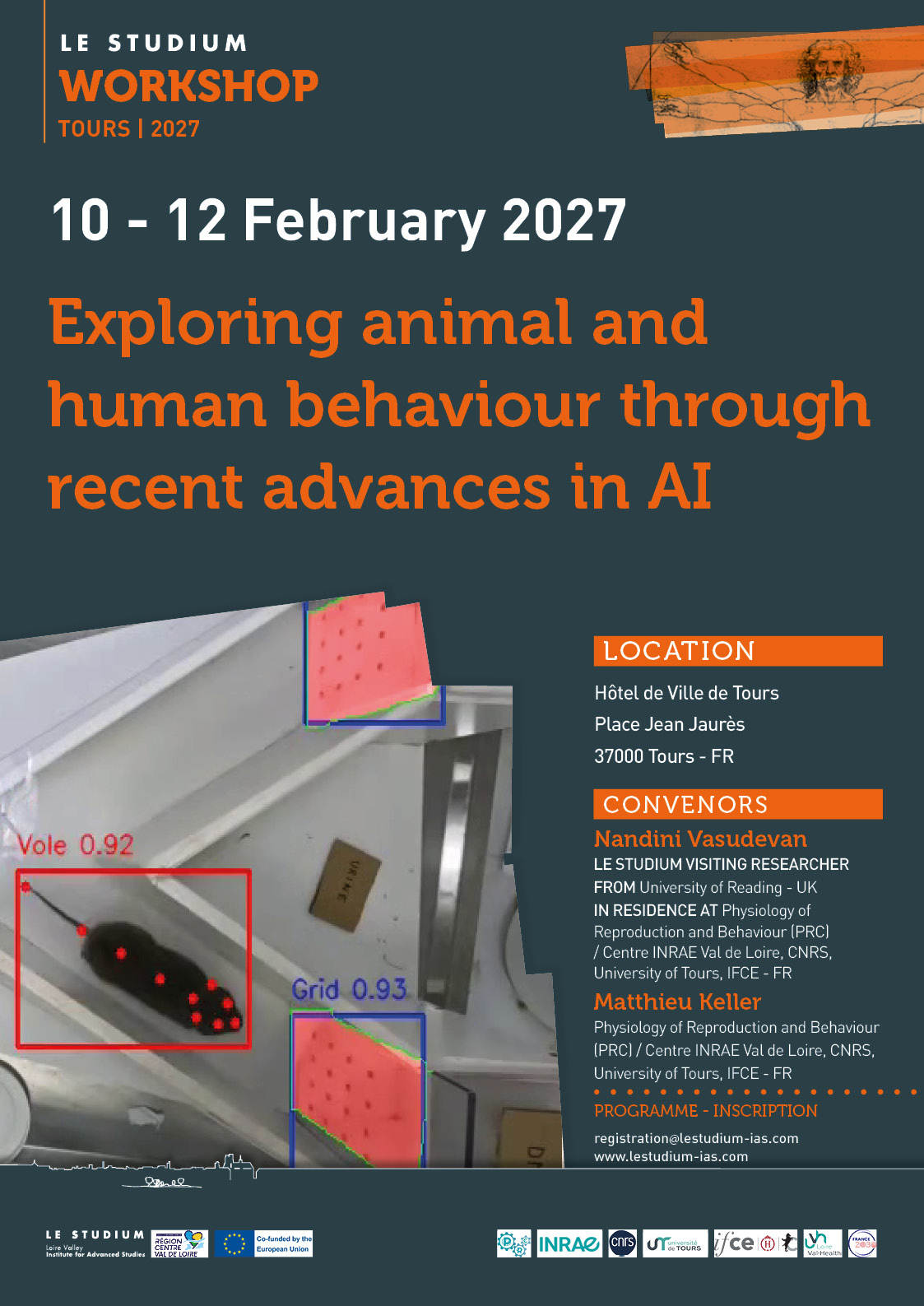
The scientific scope of understanding AI use in animal and human behaviour lies in its potential to transform how researchers observe, analyze, and interpret complex biological and ecological systems. Data in this field is often wide-ranging, detailed and can be gathered from various sources particularly in naturalistic environments - such as camera traps, acoustic sensors, GPS collars, video recording and drone imagery—allowing for automated tracking of animals with unprecedented scale. AI-driven software using neural networks can automatically track and maintain the identities of individual animals—even in large groups—without invasive markers, using advanced computer vision algorithms. Now, deep learning models incorporated into software can detect animal behaviors such as individual movements, social interactions, feeding patterns, and signs of distress from video footage using pose identification. AI also allows researchers to identify, using clustering, subtle or previously unnoticed patterns as well as identify behavioural sequences and transitions by using Bayes inferential and Hidden Markov prediction methods.
👉This workshop is designed for students/investigators interested in using AI to understand simpler behaviours of single animals before progressing to the dynamics of group behaviour.
Convenors
Nandini Vasudevan, LE STUDIUM Visiting Researcher
FROM University of Reading - UK
IN RESIDENCE AT Physiology of Reproduction and Behaviour (PRC) / Centre INRAE Val de Loire, CNRS, University of Tours, IFCE - FR
Matthieu Keller
Physiology of Reproduction and Behaviour (PRC) / Centre INRAE Val de Loire, CNRS, University of Tours, IFCE - FR